Winter Haven Comfort Retreat
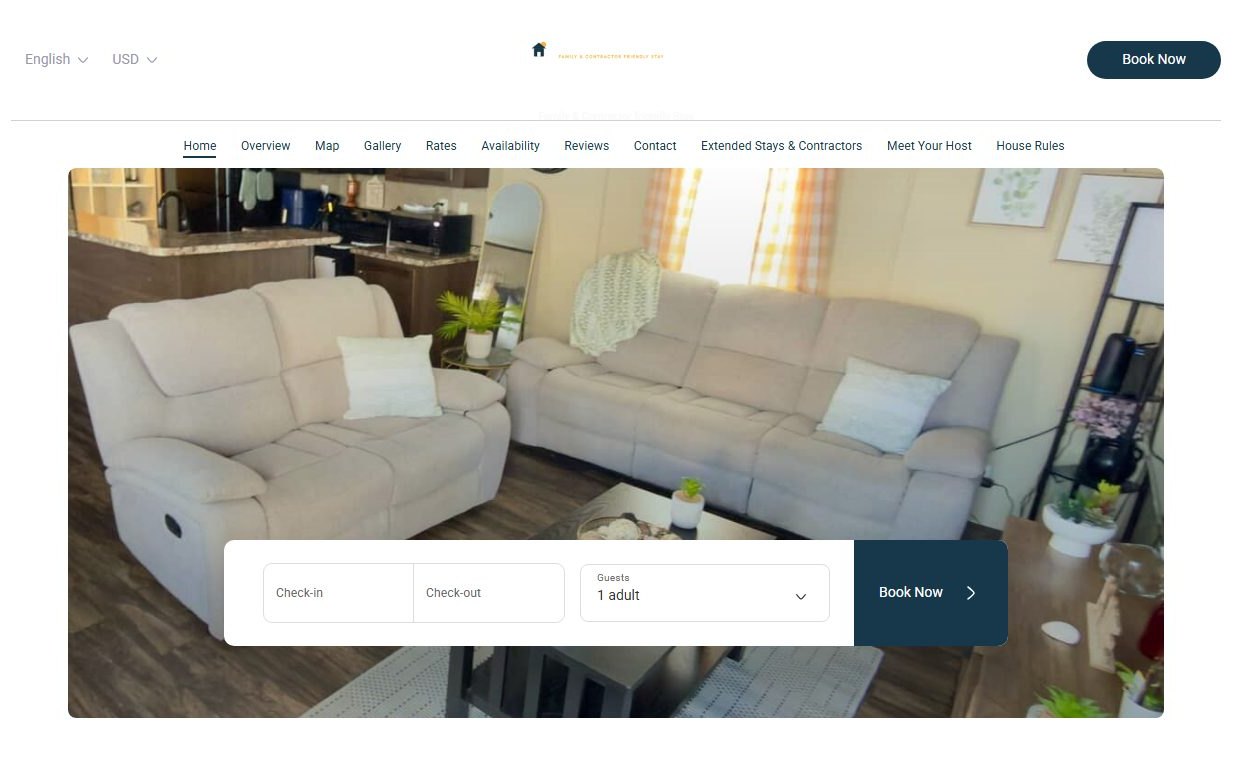
A Florida vacation rental was running a page-builder template whose title tag was literally the word “Home.” The bigger problem wasn't the template — it was that the whole business was betting on a search it could never win.
A ten-page site whose title tag said “Home.”
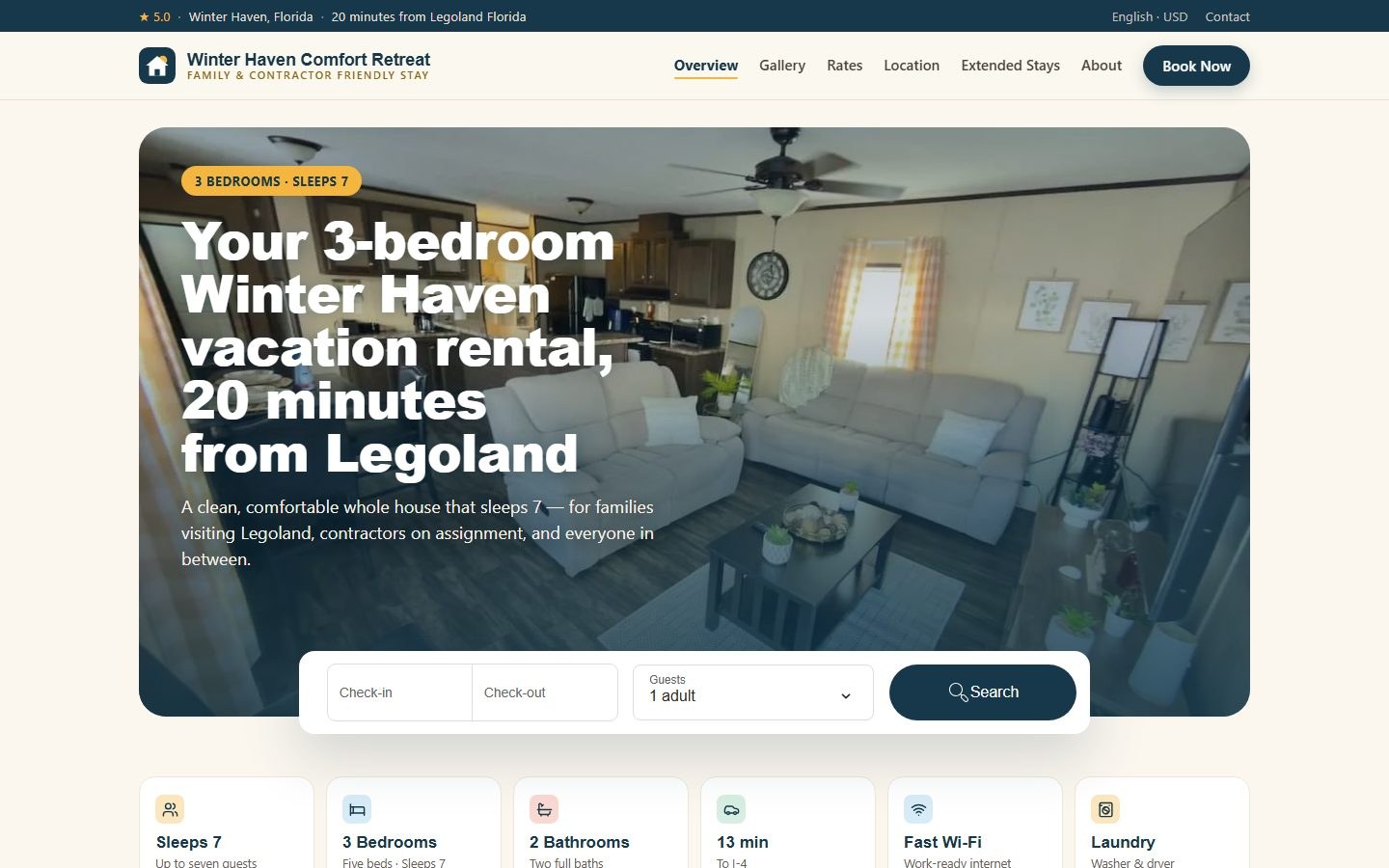
The house was already earning five-star stays; the website was losing the guests who never got that far. The title tag, the meta description and the social tags all said “Home,” so every Google result and every shared link led with that instead of the name of the business. Google's Rich Results Test returned “no items detected” — no structured data of any kind told search what this was, what it cost or where it stood. Content was injected by JavaScript, the least reliable thing to hand a crawler. And the proximity claims didn't survive being measured: “minutes from Legoland” and “3 minutes from I-4” are actually 20 and 13 — which guests discover the moment they get in the car.
You cannot out-rank Booking.com. So don't try.
- A positioning call before a single page was writtenThe obvious search is “vacation rental near Legoland” — owned by Airbnb, Vrbo, Booking.com and Tripadvisor, with the rentals that do rank sitting 1.7 miles from the park. This house is a 20-minute drive. That fight is lost on the merits before SEO enters into it, so I pointed the site somewhere else.
- Six landing pages aimed where the platforms are weakContractors and crews, travelling nurses, and monthly renters — people badly served by an interface built around weekend date-pickers — written the way they actually search: commute time to the hospital, parking for work trucks, in-home laundry, rates quoted by the week. Then the same three pages in Spanish with reciprocal hreflang, for a local workforce nobody else in the market was writing for.
- Ten pages became twenty-three, hand-built and staticEach with its own title, description and canonical, six schema types against none before, and content in the source rather than assembled by JavaScript — so crawlers and answer engines can read the property as an entity.
- A rebrand off a trademark they didn't ownThe business had been trading on a domain built around a name it didn't control. Renaming removed that exposure while it was still cheap, and the descriptive “near Legoland Florida” copy guests actually search for stayed exactly where it was.
- The booking engine deliberately left aloneThe old platform was bad at being a website and perfectly good at being a booking engine. It was embedded and re-themed rather than replaced with something homemade that would have to be trusted with real money on day one.
A business that finally owns its own front door.
The site was days old on its new domain at the time of writing, and was indexed and ranking under its own name almost immediately — the fastest available confirmation that the migration was executed cleanly. Off-page authority still sits at zero, because a domain this new has no backlinks yet; that isn't a defect in the build, it's the one thing only time and outreach supply. Being measured: booking inquiries from the long-stay pages, tracked from launch. I'll add real figures here when there's enough data to stand behind — and not before.
What the client says.
“Tenzin rebuilt my rental website around my existing Lodgify booking system. Nicer site, nothing broken, easy on my end. He also caught that my old business name, “Legoland Comfort Retreat,” was built on a trademark I don't own and had me competing against Legoland in search. He rebranded me to Winter Haven Comfort Retreat and set the site up so I still show up for people looking near the park. He brought me ideas I hadn't asked for and didn't know I needed.”